





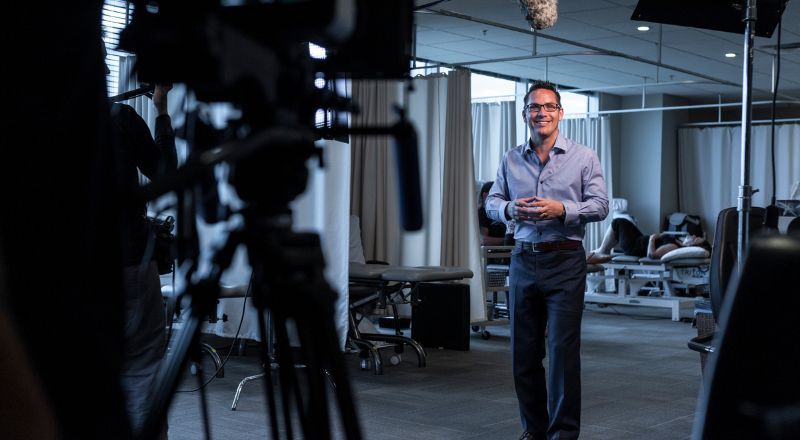









If you’ve noticed local parks transforming or heard that distinct, rhythmic “pop-pop” sound echoing across Edmonton courts, you aren’t alone. Pickleball is currently the fastest-growing sport in North America. Whether you’re a seasoned player looking to sharpen your game or just getting off the couch to enjoy the summer sun, our latest episode of Life Shouldn’t Hurt covers the sport with practical health tips, strategy, and insights.
Before getting into court strategy, let’s start with a surprising summer health trick: pickle juice. Beyond being a favorite snack side, pickle juice can actually stop acute muscle cramps in their tracks. It isn’t just about hydration or electrolytes. The sharp, intense taste acts as a neurological “noxious stimulus” that immediately interrupts the neural pathway causing the cramp. It is a handy trick to keep you playing pain-free all summer.
Pickleball Insight: The Art of Patience and Strategy
In this episode, I am joined by Gary Fletcher, a veteran professional tennis coach who successfully transitioned his background into pickleball. Gary breaks down the main differences between the two racket sports. While tennis relies on immense power and covering large amounts of court, pickleball plays out more like “life-size ping pong.”
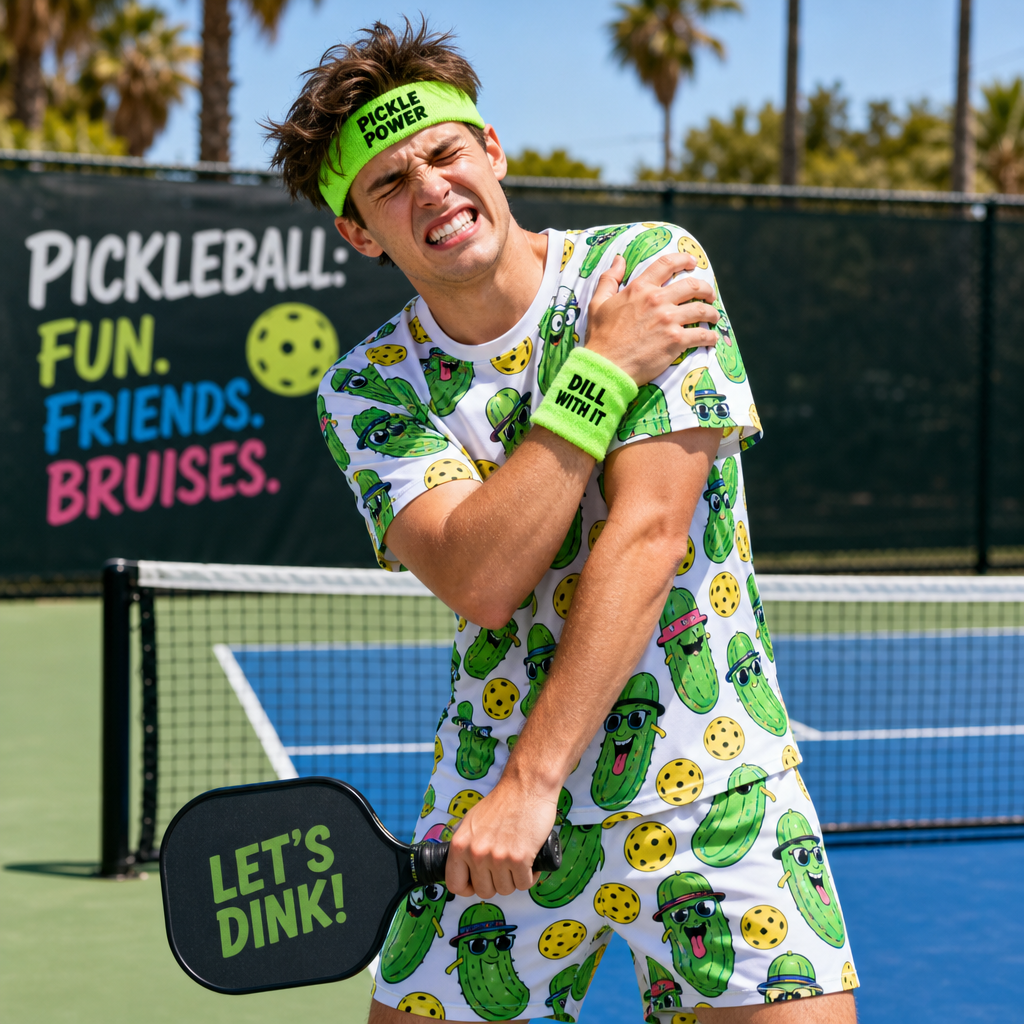
For players looking to improve this season, Gary shares a key piece of advice: pickleball is a game of patience, not just power. Unlike tennis, where players hunt for quick, aggressive winners, pickleball requires a strategic, chess-like approach. Winning points often comes down to slowing the game down and mastering the “dink” (a soft, controlled shot that lands safely in the opponent’s non-volley zone, affectionately known as “the kitchen“).
However, mastering the dink, pivoting quickly for lateral volleys, and playing long summer matches can strain your body if you aren’t prepared.
What Are the Most Common Pickleball Injuries I Should Watch Out for This Summer?
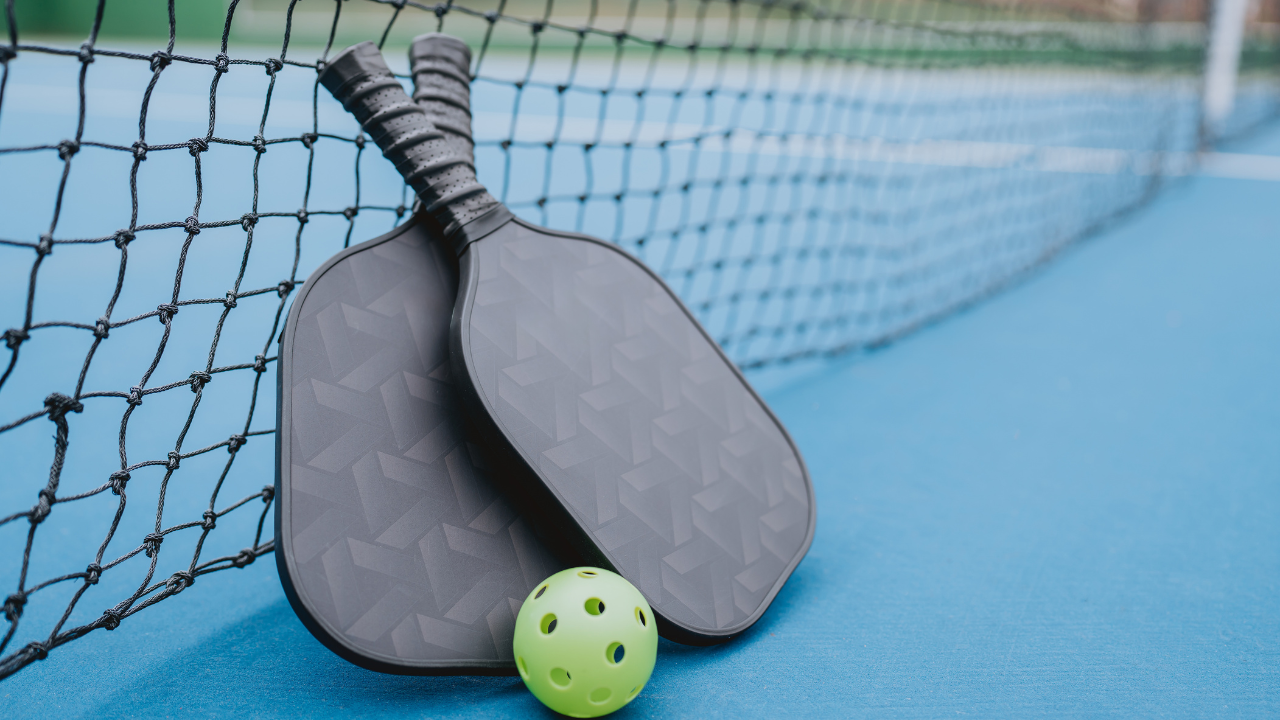
While pickleball is accessible to all ages and skill levels, its rise in popularity has brought a matching increase in pickleball injuries. Because the game involves sudden stops, quick acceleration, and repetitive arm motions, players frequently run into overuse problems.
The most common issues we treat in the clinic include:
- Rotator cuff tendinopathy from repeated serves and overhead smashes.
- Tennis or pickleball elbow (lateral epicondylitis) caused by repetitive wrist flicking and paddle vibrations.
- Lower body strains, including calf strains and ankle sprains from quick lateral movements on hard outdoor courts.
Why Do My Shoulder and Elbow Hurt After Playing Pickleball?
If you wake up the morning after a long session with a dull ache radiating down your forearm or a throbbing shoulder, your body is asking for attention. The repetitive strain of thousands of swings, dinks, and blocks creates micro-trauma in your tendons. When tendons don’t get enough recovery time between summer matches, irritation sets in and leads to persistent pain that can easily derail your season.
How Can Sports Physiotherapy Treat Tennis or Pickleball Elbow?
My goal as a physiotherapist is to keep you playing pain-free. One simple change for your summer routine is to ditch static stretching before you play. Instead, start with a dynamic warm-up (such as arm circles, torso rotations, and light footwork drills) to get blood flowing to your muscles and protect your joints.
When minor aches turn into persistent tendon pain, targeted clinical treatment can speed up your recovery. At Leading Edge Physiotherapy, we pair individualized sports physiotherapy with techniques that target pickleball elbow. For stubborn conditions like pickleball elbow, radial shockwave therapy can help break down scar tissue, stimulate circulation, and get you back to the kitchen line faster.
When Should I See a Sports Physiotherapist Near Me for a Court Injury?
Don’t wait for a small tweak to sideline you for the rest of the summer. If pain lasts more than a few days, changes how you swing, or interferes with daily life, get it checked out. Whether you need physiotherapy care in Edmonton or are looking for a reliable physiotherapist near you across our regional locations, our team is ready to help.
At its core, staying active is about building long-term resilience and enjoying your sport. In the episode, Gary and I also talk about the risks of early sports specialization, encouraging players of all ages to mix up their activities to avoid burnout and overuse injuries.
Ready to grab a paddle, stay healthy, and make the most of court season? Listen to the full episode on Spotify or Apple Podcasts. As always, the best way to feel good long-term is simple: keep moving.
This content is for informational purposes only and is not a substitute for professional medical advice. Always consult a qualified healthcare provider regarding any medical concerns.


