TRV Chair | Leading Edge Physiotherapy Alberta | B.C. Physical Therapy

our TRV chairs: precision, comfort, and hope for BPPV patients

Available at Royal Glenora Club (Edmonton) & University District (Calgary)

At Leading Edge Physiotherapy, we are deeply grateful to be trusted by patients from across Canada seeking relief from benign paroxysmal positional vertigo (BPPV). We understand how disruptive and frightening vertigo can be—and we’re proud to offer a tool that brings clarity, comfort, and results: the TRV Chair.

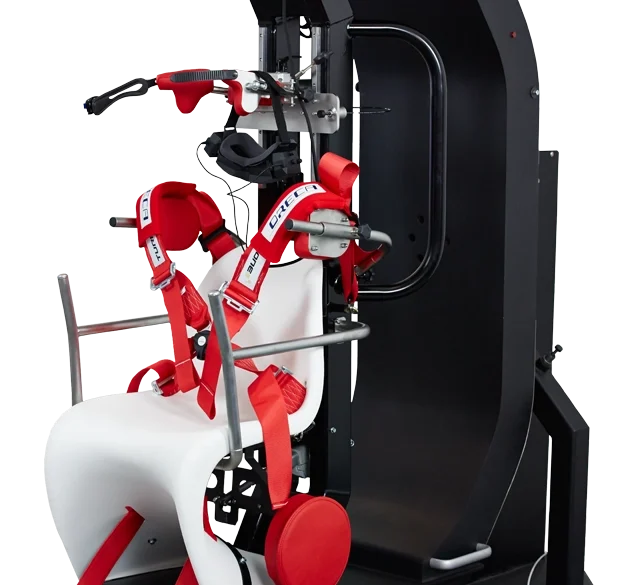
This advanced diagnostic and treatment system allows our specially trained clinicians to rotate patients 360 degrees along the plane of each semicircular canal, and to lock them in precise positions for detailed observation. It’s a game-changer for both diagnosis and treatment—and it’s available at only two locations: Royal Glenora Club and University District.

Why the TRV Chair Matters (and it does matter)

BPPV is the most common cause of positional vertigo, yet many patients—especially those who are elderly, disabled, or have neck limitations—struggle to undergo traditional bedside testing and treatment. The TRV Chair removes these barriers, offering a safe, comfortable, and effective alternative for a wide range of patients.

Enhancing the Success of BPPV Treatment

Standard maneuvers like the Epley and Semont techniques are often used to reposition displaced inner ear crystals (otoconia). The TRV Chair enhances these maneuvers by adding kinetic energy—motion-based force that helps mobilize even the most stubborn otoconia. This added energy increases the likelihood of successful repositioning and symptom resolution.

How Kinetic Energy Helps

In cases of canalithiasis, where otoconia are freely floating within the semicircular canals, kinetic energy becomes essential. The TRV Chair transmits this energy by driving its main arm against a hydraulic stop, creating a gentle deceleration that helps relocate even the smallest particles. This process is often the only viable solution for patients experiencing nystagmus triggered by misplaced otoconia.

Diagnostic Precision Without Discomfort

The TRV Chair’s 360-degree rotation allows each canal to be stimulated in its full range, offering exceptional diagnostic accuracy. Unlike traditional bedside methods, the chair enables prolonged testing without discomfort—making it ideal for patients who previously couldn’t tolerate standard procedures.

Safe and Accessible for All who need it

Patients are securely and comfortably supported throughout the process, making the TRV Chair suitable for:

  • Individuals with neck injuries or limitations
  • Elderly or physically disabled patients
  • Those who have previously been unable to access effective BPPV treatment

This inclusivity is part of what makes the TRV Chair so impactful—and why we’re honored to offer it.

VisualEyes™ Technology for Deeper Insight

Integrated into the TRV Chair is the VisualEyes™ Video Frenzel system, which allows clinicians to observe fixation-free nystagmus in high detail. Eye movements are displayed on a large screen, providing both diagnostic clarity and an opportunity for patients and families to better understand the condition and treatment process.

A Grateful Step Forward

We know how exhausting it is to live with dizziness—and how powerful it is to finally feel steady again. We’re grateful to be part of that journey. Whether you’re newly diagnosed or have struggled for years, the TRV Chair offers a path forward with precision, comfort, and care.

Contact our Royal Glenora or University District clinics today to learn more or book your assessment. Because Life Shouldn’t Hurt™, and vertigo shouldn’t hold you back.


Acknowledgement:

Excerpts from (https://www.interacoustics.com/balance/chairs/trv-chair)

Request an Appointment

Questions or other inquiries sent via webform will be responded to within 48 hours. The more you tell us, the more detail we can provide.

This field is for validation purposes and should be left unchanged.
Name(Required)

Learn More About Balance and Dizziness Disorders