





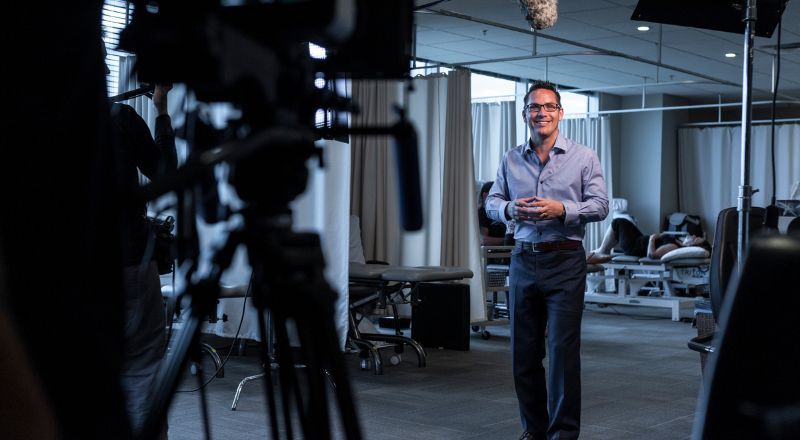







Hey everyone, Grant Fedoruk here, and welcome to another episode of Life Shouldn’t Hurt! On this show, my co-host, Anita Cassidy, and I are on a mission to help you navigate the physical and mental hurdles that hold you back from living your best life.
The Surprising Power of Face-to-Face Connection
We kick off this week’s episode with a surprisingly lively discussion about something simple but powerful: old-school board games. From childhood memories of Monopoly to card games like Crib and Hearts, we talk about how simple face-to-face games foster genuine connection. I even share a deeply personal and funny memory of my late dad during a family game night in Jasper. We were playing a guessing game, and when the card for “Mother Teresa” came up under a tight time limit, my dad just stared at us and yelled, “Nun!”—simple, direct, and unforgettable.
That laugh got me thinking: connection, playfulness, and looking after our mental well-being are vital pieces of our physical health. In a world dominated by electronics, getting away from screens and pulling out a board game might actually help your physical well-being. And that brings us to the core of today’s show: digestion, pooping, and why life shouldn’t hurt.
Understanding Your Digestive Health with Laura Velcoff
To help us make sense of what’s going on inside our bodies, we welcome the brilliant Laura Velcoff, a registered dietitian with Revive Wellness in Edmonton. Laura takes a beautiful, compassionate, whole-person approach to health that looks far beyond just what’s on your plate.
Practical Wisdom: Actionable Takeaways for Gut Health
If you’ve ever felt like your digestive system is running your entire life, this episode is for you. Laura and I discuss how chronic bloating, constipation, diarrhea, or sudden urgency can ripple into every corner of your day—disrupting your sleep, making office jobs incredibly uncomfortable, limiting your travel, and causing painful social isolation.
Instead of powering through or feeling embarrassed, Laura shares a wealth of actionable takeaways that you can start using today:
- The Gut-Brain Highway Is Real: If anyone has ever told you your digestive issues are “all in your head,” they are wrong. Your brain and gut are connected by a powerful, two-way nervous system highway via the vagus nerve. Stress physically alters your motility, and because our nervous systems are highly complex, our bodies actually remember pain and become hyper-sensitive over time. Laura shares how simple deep-breathing routines can activate your “rest and digest” state.
- Embrace Addition, Not Subtraction: So many people immediately try to eliminate or restrict their food choices when their stomach hurts. Laura’s golden rule is to lead with adding support, not taking away foods. Restricting your diet too quickly can cause unnecessary stress and anxiety.
- Start with “Comically Small” Movement: You don’t have to spend hours at the gym to get your digestive system moving. Laura points out that physical movement is a key driver of peristalsis (the muscle contractions that keep digestion on track). If you’re feeling unwell, start with a step that is “comically small”—a 5-minute walk during your lunch break or just standing up to clean the kitchen is enough to stimulate your gut.
- Balance Your Fiber and Hydration: Most of us aren’t getting enough fiber. Laura suggests simple, painless swaps like switching your white morning bread to a whole-grain CD loaf. She also clarifies that different fibers do different jobs. For instance, soluble fibers (like oats, chia, and flax) gel up when mixed with water, which is incredibly helpful for slowing down urgency and forming better stool texture.
- Women’s Health & Pelvic Floor Coordination: Women disproportionately suffer from irritable bowel syndrome (IBS), and hormonal fluctuations during menstruation, pregnancy, postpartum, and menopause play a major role in gut motility. Laura sheds light on pelvic floor health—reminding us that muscles do the work in the bathroom, and tools like a Squatty Potty or pelvic floor physiotherapy can restore proper coordination.
- Stick to a Consistent Eating Routine: Regular, frequent eating—especially not skipping breakfast—signals your digestive tract to contract and keep things moving smoothly.
Why You Can’t Miss This Episode
This episode is packed with warmth, humor, and raw honesty about the health issues we usually pretend aren’t happening. Digestion doesn’t have to run your show, and you do not have to struggle alone. Laura gives us the exact roadmaps for when to seek professional medical or dietary support, reminding us that a dietitian belongs on everyone’s health team.
Do not let discomfort keep you in the dark. Please make sure to follow and subscribe to Life Shouldn’t Hurt on Spotify, Apple Podcasts, and YouTube so you never miss an episode! Let’s learn to listen to our bodies, together.
I hope this conversation empowers you in some way. If you believe in these stories and want to help us turn this ripple into a wave of difference across Canada, please like, follow, and share Life Shouldn’t Hurt with your friends and family. Your support helps us spread this vital message. Support the show
This content is for informational purposes only and is not a substitute for professional medical advice. Always consult a qualified healthcare provider regarding any medical concerns.