





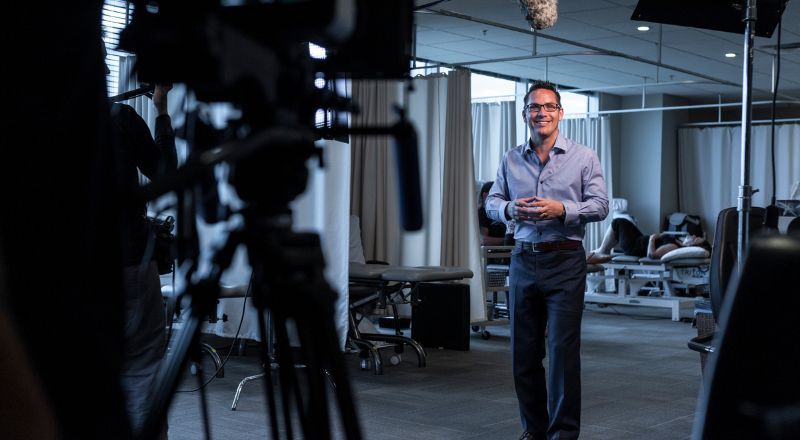









In this episode of Life Shouldn’t Hurt, I sat down with Dr. Jason Motkoski, a physician and interventional radiologist from Canadian Diagnostic Centers. Many people think of radiology as simply reading X-rays or MRIs, but Dr. Motkoski explained how the field has advanced into what’s now called interventional radiology. This specialty uses imaging technology not just to diagnose, but to guide precise treatments for pain and injuries.
Targeted Treatments
Dr. Motkoski described how physicians use fluoroscopy (live X-ray) and ultrasound to guide needles into specific joints or soft tissues. This level of accuracy means patients receive treatment exactly where it’s needed, reducing guesswork and improving outcomes.
Injectable Options
We explored a range of therapies available through interventional radiology. Corticosteroids can reduce inflammation, hyaluronic acid can improve tissue health, and Platelet-Rich Plasma (PRP) offers a regenerative approach by using a patient’s own blood to help heal tendons.
Diagnostic Tools
We broke down the differences between imaging modalities. X-rays are best for looking at bones, CT scans provide a three-dimensional “bread loaf” view, and MRIs deliver exceptional detail of soft tissues. Each tool has its place, and together they give physicians a comprehensive picture for diagnosis and treatment.
1. The Technology of Precision
Dr. Jason Motkoski emphasizes that the goal of interventional radiology is to deliver “accurate care at the right time, right place.” To achieve this, physicians rely on two primary methods of guidance:
Fluoroscopy – Often described as a “live X-ray,” fluoroscopy takes continuous low-dose pictures, allowing the physician to see the needle moving inside the body. It is primarily used for landmarking bones.
Ultrasound – Using sound waves to visualize soft tissues, ultrasound is the preferred method for guiding needles into muscles, tendons, and ligaments.
2. Injectable Therapies
The episode explores several substances used to treat pain and injury, moving beyond simple pain relief to focus on tissue health.
Corticosteroids (The Anti-Inflammatory)
Dr. Motkoski describes corticosteroids as essentially putting a “giant Advil” directly into a joint to stop inflammation. He addresses common myths, explaining that negative effects historically came from high, frequent doses. In Alberta, multidisciplinary teams have established strict guidelines, typically requiring a three-month wait between injections in the same spot to ensure safety. While the goal is local treatment, a small amount of the medication may circulate systemically. Interestingly, this can sometimes be beneficial—for example, injecting the right knee may provide some relief to the left knee.
Hyaluronic Acid (The Lubricator)
Hyaluronic acid promotes tissue and cartilage health. It works well in combination with steroids, where steroids provide immediate relief and hyaluronic acid helps that relief last longer. On its own, hyaluronic acid offers less immediate pain reduction but can provide relief for six to nine months.
Platelet-Rich Plasma (PRP) (The Healer)
PRP is a regenerative therapy used to repair injuries such as rotator cuff tears or tennis elbow. The process involves drawing the patient’s blood, spinning it in a centrifuge to isolate platelets and growth factors, and injecting it back into the injured tendon. Platelets are what form scabs (collagen) when you cut yourself; injecting them internally encourages the body to rebuild damaged tissue.
3. Diagnostic Tools
The episode also clarifies the differences between common imaging modalities:
X-Ray – A 2D photograph where structures are superimposed, best for bones and fractures.
CT Scan – A “fancy X-ray machine” that spins around the patient. Dr. Motkoski uses the analogy of a loaf of bread: while an X-ray is the whole loaf, a CT scan allows doctors to pull out and examine individual slices in 3D. CT scans are excellent for bone detail and, with dye, can highlight blood vessels.
MRI – Using magnetic properties, MRI provides exquisite detail of soft tissues, making it ideal for examining ligaments and tendons.
4. Safety and Radiation Philosophy
A significant portion of the conversation addresses patient concerns about radiation and medication.
The Pill Burden Argument – Local injections are often safer than oral painkillers. Pills must pass through the stomach and bloodstream, affecting the whole body, whereas injections place a small amount of medication exactly where it is needed.
Radiation Context – To ease fears about X-rays and CT scans, Dr. Motkoski explains that background radiation varies by city. The difference between living in Vancouver (low background radiation) and prairie cities like Winnipeg or Edmonton (higher background radiation) is actually greater than the dose received from a major CT scan.
5. Patient Empowerment
Ultimately, these interventions are tools to help patients avoid surgery or manage pain while waiting for procedures such as joint replacements. Whether treating a high-performance athlete or someone with rheumatoid arthritis, the goal is to reduce inflammation so patients can return to physiotherapy and movement.
In Health, Grant Fedoruk
This information is not meant to replace the advice or treatment of a qualified physician or physiotherapist. It is meant for information only. Please seek an assessment and discuss your treatment options with your caregiver prior to making a decision about your treatment path.


